A map of what to learn next
Finishing a textbook raises an obvious question: what now? Getting stuck in one raises a harder one: is this the wrong book, or am I missing something it assumes? The Learning Library now answers both with a learning map, a little like the skill tree in a video game.
Why order matters
What students already know is the biggest difference between them. A study of 1.3 million practice interactions found that students start in very different places but gain at similar rates with each practice opportunity (Koedinger et al., 2023). So when someone struggles, the fix is usually what comes before the material, not more of the same. Mastery learning is built on the same idea: secure the earlier unit, then move on. It is one of the best-supported approaches in education, with positive effects across 108 controlled evaluations and the largest gains for students who were behind (Kulik, Kulik & Bangert-Drowns, 1990).
Back, forward and sideways
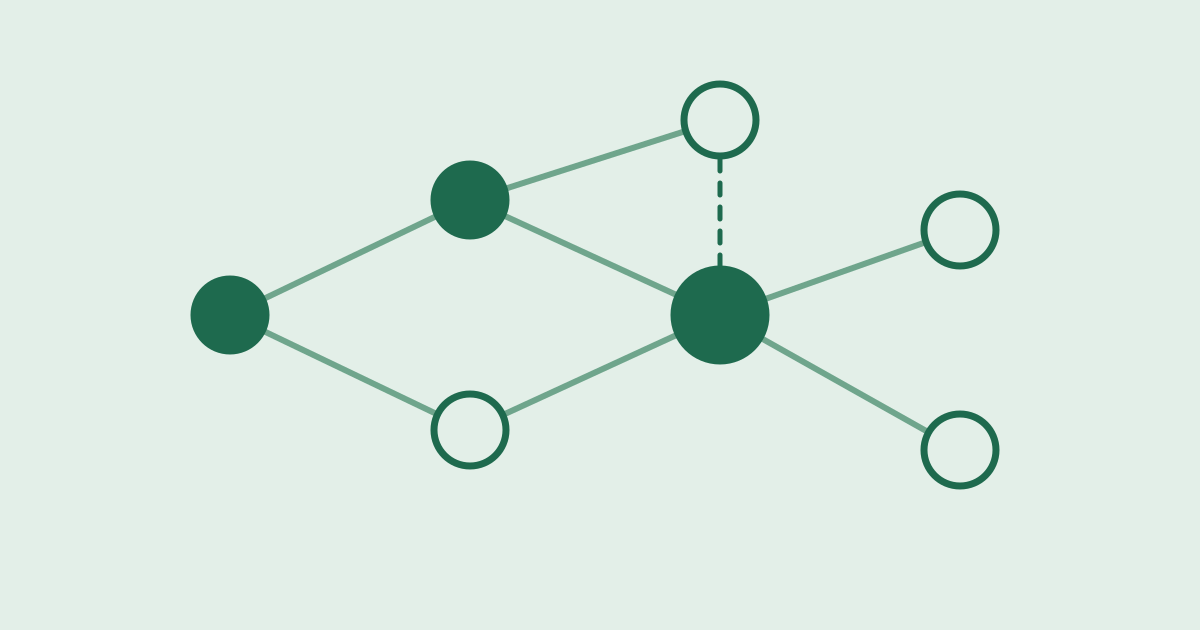
Every book and topic in the library is a point on the map, with three kinds of links:
- Back: learn this first. Books that teach what this one assumes, such as Algebra I before Algebra II.
- Forward: learn this next. Books that build on this one.
- Sideways: the same material, explained differently. Another book at about the same level, for when one explanation isn't clicking.
Think of it as a chain you can walk in both directions, with side doors. Each link carries a one-line reason a student can read, like "Covers the matrix algebra this book assumes."
How the links are made
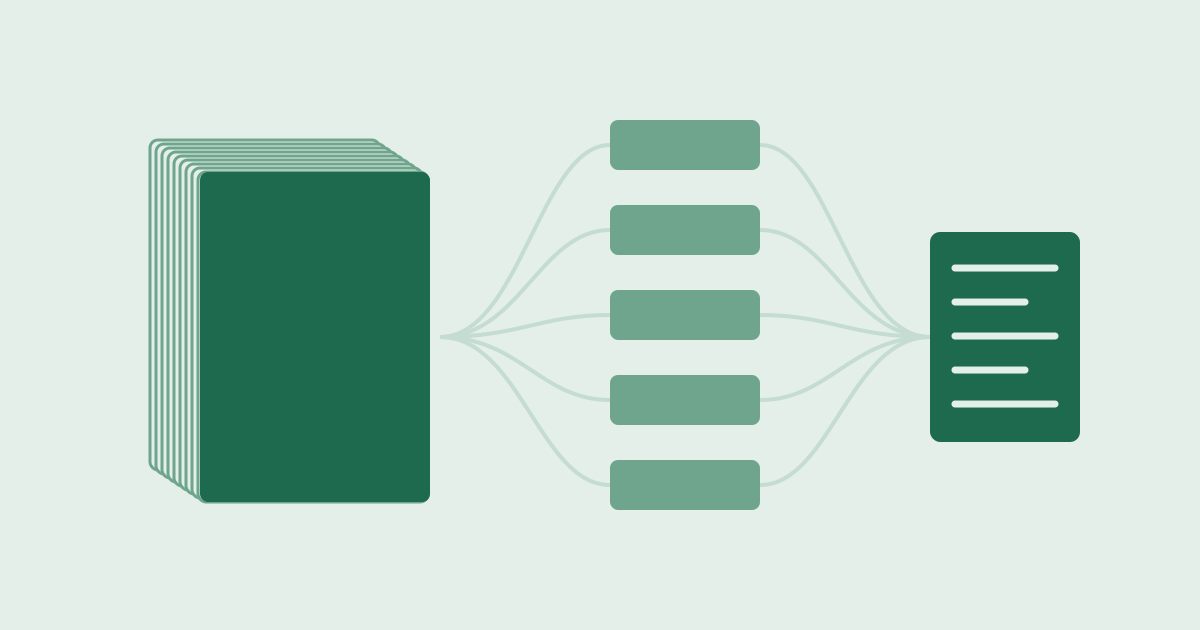
When a shelf finishes building, we find the books closest to it in meaning, using the summaries we already write for search. A fast AI model then compares the new book with each one, chapter titles and summary side by side, and decides: which should come first, whether they're alternatives, or neither. It is told to be conservative, and to claim an order only when a teacher would clearly agree. Weak links are thrown away.
Two rules keep the map sensible:
- No loops. The map never says both "A before B" and "B before A".
- Teachers win. A moderator can set a link by hand, and the automatic linker never overwrites it.
Links join books, not individual uploads. Every version of a book shares its place on the map, and the one shown is always the version with the most likes, with the newest winning a tie.
When Learn uses the map
The map stays out of the way until it's useful:
- You've mastered every chapter: Learn shows "Learn next", the books that build on this one.
- You're stuck: if you fail a chapter's mastery check twice, or score under 60% on it, Learn offers "Try a different explanation" (sideways) and "Brush up on the groundwork" (back). Your progress on the current book is kept, so trying another one costs nothing.
- Any time: every shelf page has a Learning path card with all three directions.
What it isn't
The map doesn't decide anyone's path. It is a set of signposts. A student can ignore every suggestion, and a teacher can still assign whatever book they like. As the library grows, the map fills in on its own: each new shelf links itself to its neighbours.
How this connects to our solution
- Belief 10: "Learning is a path, not a pile." This post is the long version.
- Belief 2: "One good shared source beats a thousand private copies." The map only works because the library is shared.
- In the product: the Learning path card on every shelf page, and the "Learn next" and "Finding this one hard?" cards in Learn.
- Call to action: See the learning map on Our solution · Find your textbook