Seven types of study methods, and what the evidence says about each

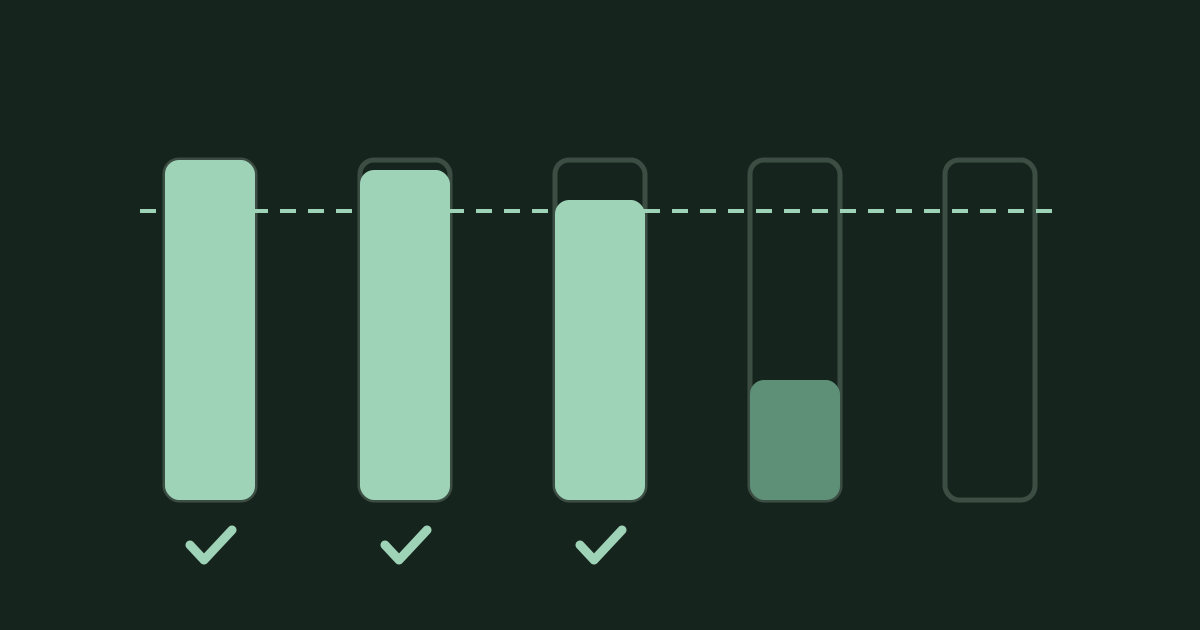
There are dozens of named study techniques, and they aren't equally good. The big research reviews sort them into a handful of kinds. Testing yourself has the strongest evidence; summarising and memory tricks have the weakest. Here is how we group the 20 tools in our Learn tab, and why.
The seven types
| Type | What you do | Evidence | Tools in Learn |
|---|---|---|---|
| Retrieve | Pull it from memory | Strong | Flashcards, Quick recall, Fill the gaps, Brain dump, Warm-up quiz |
| Mix & compare | Shuffle topics, tell similar ideas apart | Moderate | Mixed review, Which idea is it? |
| Explain | Say why it's true; ask your own questions | Moderate | Explain it back, Why is it true?, Write a question |
| Organize | Map, summarise, sequence | Limited to moderate | Concept map, Summarize it, Put in order |
| Solve | Worked solutions, problems, mistakes | Moderate | Worked examples, Try it first, Spot the mistake |
| Teach & ask | Teach someone or quiz each other | Moderate | Quiz a partner, Teach it |
| Picture it | Vivid images, routes, keywords | Limited (moderate for vocabulary) | Memory palace, Keyword link |
The grouping lines up with the major reviews: Dunlosky et al. (2013), Weinstein and Mayer's strategy categories, Fiorella and Mayer's generative learning strategies, and Hattie & Donoghue (2016).
What the evidence says
- Retrieve. Practice testing is one of only two techniques Dunlosky's team rated high utility. Writing down everything you remember beat building a concept map by about 50% on long-term retention (Karpicke & Blunt, 2011). Fill-in-the-gap practice helped across 23 classroom studies (Moreira et al., 2019).
- Mix & compare. Mixing examples of different categories helps people tell them apart (Kornell & Bjork, 2008). A 7th-grade maths trial found a large effect, d = 0.83 (Rohrer et al., 2019).
- Explain. Asking "why is this true?" beat rereading for remembering facts (Pressley et al., 1988). Teaching students to write their own questions improved comprehension (Rosenshine, Meister & Chapman, 1996).
- Organize. Mapping and summarising help some students, but summarising rates low without training (Dunlosky et al., 2013). The evidence for putting steps in order comes mostly from programming (Parsons problems).
- Solve. Worked examples help beginners most. Finding the error in a worked solution beat ordinary problem solving a week later, d = 0.62 (Adams et al., 2014). Students with less background do better when the error is pointed out to them (Dieterich et al., 2025).
- Teach & ask. Peer tutoring averages d = 0.54 (Hattie & Donoghue, 2016).
- Picture it. Keyword mnemonics helped students learn Russian vocabulary, 72% against 46% (Atkinson & Raugh, 1974), but rate low for most other material.
Spacing isn't a type
Spreading practice over days is the other high-utility technique, but it isn't something you do instead of retrieving or explaining. It's when you do them. So in Learn, every tool is spaced the same way, and no type gets an unfair advantage when we compare them.
Which type is best for you?
Averages describe groups, not you. That's why Learn starts everyone on the strongest-evidence type and then measures, with delayed check-ins, which types actually work for each student. Your results show up as a spider chart, one axis per type.
How this connects to our solution
- Built on how people actually learn: this is the full map behind the section's evidence cards.
- Belief 9: start from the methods with the strongest evidence, then measure.
- In the product: Learn's tool list, grouped by these seven types with an evidence badge on each.
- Call to action: See the research we build on